
 Sponsored link
Step by step
How to Use the BAC Water for Peptides Calculator
The calculator turns three numbers into syringe units. It works for any peptide or blend, and nothing you type is stored.
- Enter the vial amount. Use the mg printed on the vial label, such as 5 mg or 10 mg.
- Enter the BAC water added. The mL of bacteriostatic water in the vial. Not mixed yet? Use the “BAC water planner” tab to compare volumes first.
- Enter the amount to measure. Type the mcg or mg amount you already have. The calculator never picks this number for you.
- Read the units. You get the units to draw, the mL, and a syringe with the fill line. Open “Show the math” to check each step, or pick a compound in the peptide library for a calculator with its name preselected.
The basics
What Is BAC Water for Peptides?
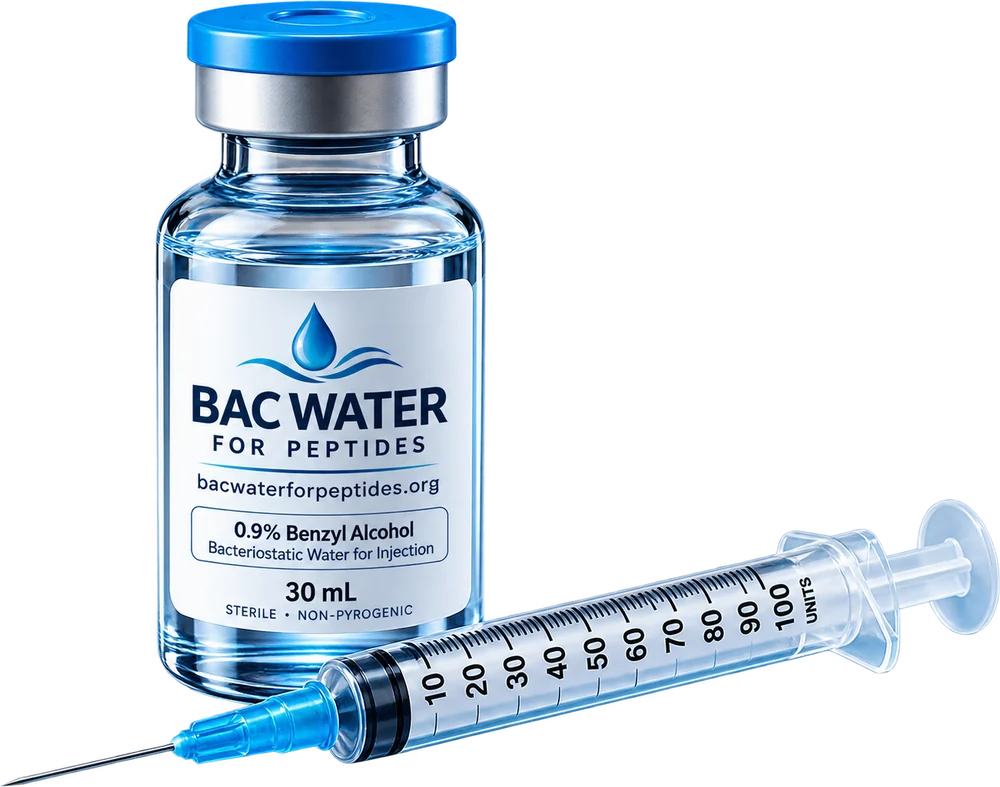
BAC water is short for bacteriostatic water: sterile water with 0.9% benzyl alcohol added. Most research peptides ship as a freeze-dried (lyophilized) powder, and BAC water is the liquid most often used to dissolve that powder so it can be measured in a syringe.
The benzyl alcohol does not kill bacteria. It slows their growth, which is why bacteriostatic water is sold for multi-dose vials that are punctured more than once. Plain sterile water has no preservative and is meant for single use.
BAC water itself has no effect on the peptide amount. It only sets the concentration, and that is the number every syringe calculation depends on. Our guide on what bacteriostatic water is covers the ingredients and labeling in more depth.
Mixing chart
How Much BAC Water to Add to Peptides
More BAC water makes a weaker concentration, so the same amount takes more units. Less water makes it stronger and takes fewer units. There is no single correct volume; the right one is simply the volume that keeps your amount readable on your syringe.
This BAC water for peptides chart shows mcg per unit on a U-100 syringe for common vial sizes:
| BAC water | 5 mg vial | 10 mg vial | 15 mg vial |
|---|---|---|---|
| 1 mL | 50 mcg/unit | 100 mcg/unit | 150 mcg/unit |
| 2 mL | 25 mcg/unit | 50 mcg/unit | 75 mcg/unit |
| 3 mL | 16.67 mcg/unit | 33.33 mcg/unit | 50 mcg/unit |
| 5 mL | 10 mcg/unit | 20 mcg/unit | 30 mcg/unit |
Very small unit numbers are hard to read on a syringe, and very large ones may not fit. The BAC water planner flags both, so you can compare volumes before mixing. For the formula behind this table, see the BAC water to peptide ratio guide.
Conversions
mg, mcg, mL, and Syringe Units
Peptide math mixes weight and volume, which is where most mistakes happen. The calculator handles every conversion, but this is what it does behind the scenes.
A unit is a volume mark, not a weight. “10 units” holds a different amount of peptide in every vial, depending on how much BAC water was added. See the full U-100 syringe units to mL chart for every mark on the barrel.
Comparison
BAC Water vs Sterile Water vs Saline for Peptides
These three liquids are often confused. The calculator math is identical for all of them; the differences are the preservative, how long an opened vial is meant to be used, and what the product labeling allows.
| Liquid | What it is | Preservative | Typical vial use |
|---|---|---|---|
| BAC water | Sterile water + 0.9% benzyl alcohol | Yes | Multi-dose; commonly 28 days after first puncture |
| Sterile water | Sterile water for injection | No | Single-dose; discard unused liquid |
| Saline (0.9% NaCl) | Sterile salt solution | Sold both ways | Depends on the product; some compounds are not compatible with salt |
Which liquid suits a given compound is a question for its labeling and a qualified professional. Our bacteriostatic water vs sterile water guide explains the trade-offs in detail.
Reconstitution basics
How to Mix Peptides With BAC Water
Reconstitution means adding a liquid to freeze-dried peptide powder. The math should be settled before the vial is opened, because the water volume cannot be taken back out once it is added.
Before mixing peptides with bacteriostatic water:
- Confirm the mg printed on the vial label.
- Choose a water volume with the BAC water planner.
- Write the resulting concentration and mcg per unit on the vial.
Handling, sterility, and administration are outside the scope of a calculator. Follow the product’s labeling and a qualified professional, and read our walkthrough on how to reconstitute peptides for the full math checklist.
Storage
BAC Water Storage and Shelf Life
An unopened vial of bacteriostatic water is usually kept at controlled room temperature until its printed expiration date. Once the stopper is punctured, the clock changes.
- Opened multi-dose vials are commonly discarded 28 days after first puncture unless the label says otherwise.
- Write the date on the vial the first time it is opened.
- A reconstituted peptide vial follows the peptide’s own storage guidance, which often calls for refrigeration.
More detail is in our BAC water storage and shelf life guide.
Buying BAC water
Choosing BAC Water for Peptides
Bacteriostatic water is simple, but the product details still matter. Look for a sealed vial with the benzyl alcohol percentage printed on the label, a clear lot number and expiration date, and a vial size that matches how much you mix at once.
Smaller vials mean less liquid left over when an opened vial reaches its discard date. Compare sellers and sizes in our guide to the best BAC water for peptides.
Important
Is This a Peptide Dosage Calculator?
People often search for a peptide dosage calculator when they need exactly this math: how many units hold an amount they already know. That is what this tool does, and our BAC water and reconstitution guides explain every step of that math.
It does not choose an amount, a schedule, or a treatment. You supply the target amount, and the result is only as accurate as the numbers you enter. For decisions about what to take, speak with a licensed clinician.
FAQ
BAC Water for Peptides FAQ
What is BAC Water for Peptides?
BAC water for peptides is bacteriostatic water: the liquid most often used to dissolve freeze-dried peptide powder. It is sterile water with 0.9% benzyl alcohol, which slows bacterial growth so a vial can be opened more than once. Once the powder is dissolved, the amount of BAC water added sets the concentration.
How much BAC water do I add to a 5 mg peptide vial?
There is no single correct volume; the choice only changes the concentration. With 5 mg, 1 mL gives 50 mcg per unit, 2 mL gives 25 mcg per unit, and 2.5 mL gives 20 mcg per unit on a U-100 syringe. The BAC water planner tab compares these volumes for the amount you enter.
How much BAC water for a 10 mg peptide vial?
With 10 mg, 1 mL gives 100 mcg per unit, 2 mL gives 50 mcg per unit, and 3 mL gives about 33.3 mcg per unit. More water makes each unit hold less peptide, so the same amount takes more units to measure.
How many units is 1 mL of BAC water?
On a U-100 insulin syringe, 1 mL equals 100 units, so 0.5 mL is 50 units and 2 mL is 200 units. Units measure volume only. How much peptide each unit holds depends on the vial mg and the BAC water added.
Can I use sterile water instead of BAC water for peptides?
Sterile water has no preservative, so it is generally labeled for single use: once opened, unused liquid is meant to be discarded. BAC water contains benzyl alcohol for multi-use vials. The math in this calculator is the same for either liquid; which one is appropriate depends on the product labeling and a qualified professional.
Do you refrigerate BAC water?
Unopened bacteriostatic water is usually stored at controlled room temperature, as its label directs. A peptide vial after reconstitution follows the peptide's own storage guidance, which often calls for refrigeration. Always follow the labeling on the specific products.
How long is BAC water good for after opening?
Multi-dose vials such as bacteriostatic water are commonly discarded 28 days after the first puncture unless the manufacturer states a different time. Check the label and date the vial when it is first opened.
Is this BAC water calculator free?
Yes. It is free, needs no account, and runs in your browser. Nothing you type is stored unless you choose to save a calculation link.